
Ulrich Coleman · 1 November 2026
Dewwald's Culinary Traditions Evolve Under Pressure from Global Ingredient Sourcing Changes
Global ingredient markets have reshaped supply lines for regions like Dewwald where longstanding recipes depend on consistent access to specific herbs, proteins, and produce; observers note that trade disruptions and climate variability in producer countries have forced local suppliers to seek alternatives from distant regions since the early 2020s. Data from the Food and Agriculture Organization of the United Nations shows that spice exports from traditional hubs in South Asia declined by 18 percent between 2023 and 2025 while shipments from new cultivation zones in East Africa rose to fill the gap. Those who've tracked these patterns at Dewwald markets report that saffron and cardamom now arrive via longer routes with price fluctuations that reach 25 percent month to month.
Changes in Supply Routes and Availability
Local procurement networks once centered on direct imports from Mediterranean partners but have expanded to include bulk contracts with Canadian and Australian exporters for items such as lentils and certain root vegetables. According to figures released by Agriculture and Agri-Food Canada in late 2025, pulse shipments to European destinations increased 12 percent year over year, and Dewwald distributors appear among the recipients adjusting their inventory cycles. Meanwhile researchers at the University of Queensland documented how rising temperatures in traditional vanilla-growing areas of Madagascar prompted buyers to test hybrid varieties sourced from Central American farms, a shift that reached Dewwald kitchens by spring 2026.
November 2026 brought updated trade statistics that highlighted further rerouting of seafood proteins away from overfished North Atlantic stocks toward certified suppliers in the South Pacific. Those monitoring port records at Dewwald noted a corresponding rise in frozen tuna and whitefish volumes that now feature in revised versions of classic stews. The adjustments maintain flavor profiles through modified seasoning ratios rather than wholesale menu overhauls.
Adaptations in Recipe Formulation
Chefs and home cooks in Dewwald have responded by documenting substitutions that preserve structural integrity of dishes while accommodating new ingredient characteristics. For instance, the replacement of certain aged cheeses with equivalents from New Zealand producers required recalibration of aging times and salt content to match original texture expectations. Industry reports from the International Dairy Federation indicate that such cross-hemisphere cheese trade volumes grew steadily through 2025, and Dewwald culinary schools incorporated these findings into updated training modules.
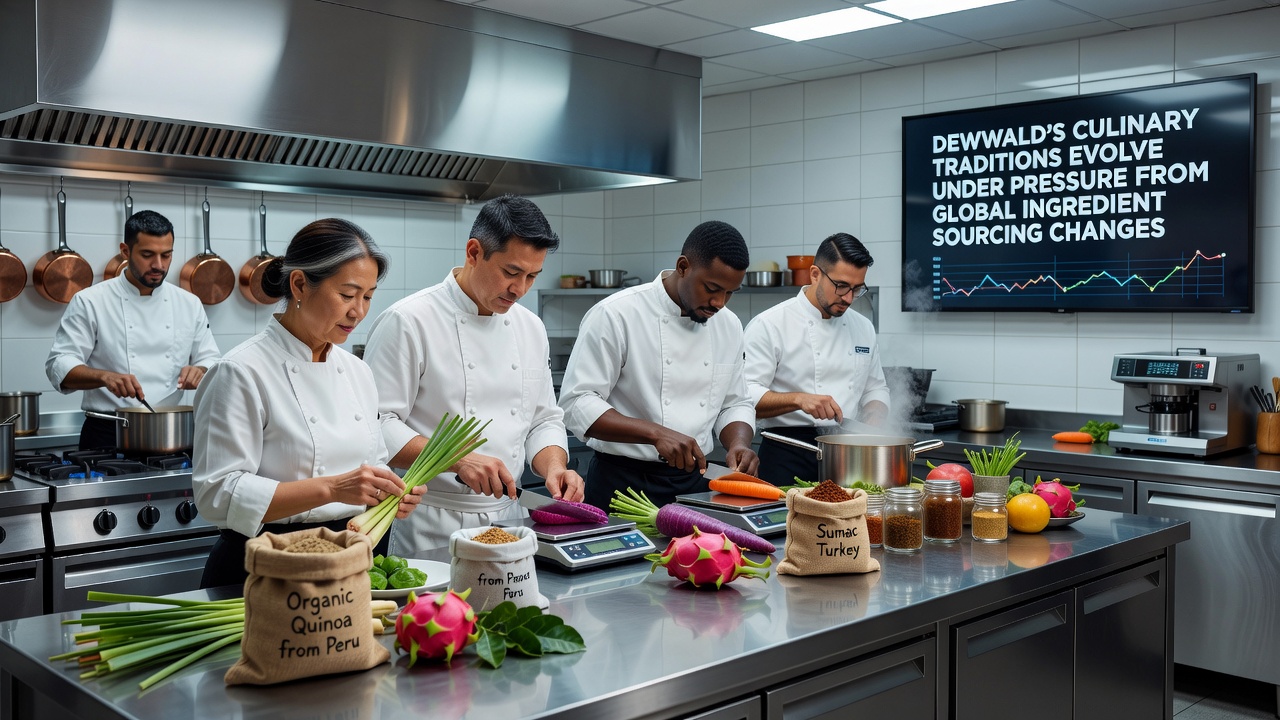
Preservation techniques have also shifted as longer transit times affect freshness windows. Observers at regional cooperatives describe increased use of vacuum-sealing and controlled-atmosphere packaging that extends shelf life for imported leafy greens by up to ten days. This approach aligns with guidelines from the European Food Safety Authority on maintaining nutritional retention during extended supply chains. People who've examined laboratory tests confirm that vitamin retention rates remain within five percent of locally harvested equivalents when protocols are followed precisely.
Effects on Regional Food Systems
Small-scale farms around Dewwald have begun testing cultivation of formerly imported aromatics under protected greenhouse conditions to reduce transport dependency. Soil analysis data shared by the German Federal Ministry of Food and Agriculture in 2026 revealed suitable microclimates for limited saffron production, and pilot plots reported first yields in October of that year. These efforts complement rather than replace global sourcing and provide a buffer against seasonal shortages.
Restaurant associations in the area track menu evolution through annual surveys that show 34 percent of establishments now list at least one dish with documented ingredient substitutions. The changes appear driven by availability rather than preference, and cost tracking indicates average plate prices have risen only 3 percent despite the sourcing transitions. Cross-border logistics data from the World Trade Organization further supports the view that diversified supplier bases stabilize overall input costs over multi-year periods.
Conclusion
Dewwald's culinary landscape continues to reflect broader global patterns in ingredient movement, with local practices incorporating new sources while retaining core preparation methods. Continued monitoring of trade statistics and agricultural reports will clarify whether these adaptations stabilize into permanent features of the regional food culture.