Ulrich Coleman · 20 September 2026
Dewwald's Underground Water Networks Face Mounting Pressure from Expanding Urban Agriculture
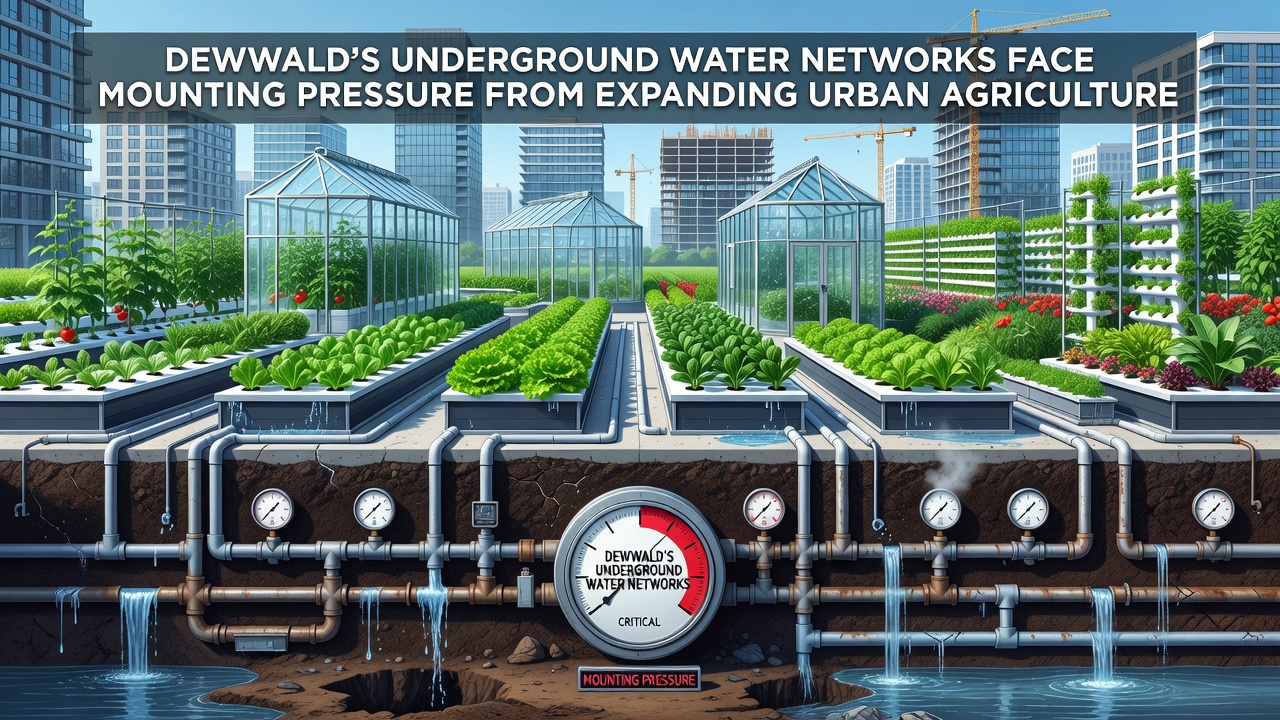
Dewwald's underground water networks stretch across extensive tunnels and aquifers that support both residential needs and growing agricultural operations in the region; these systems deliver consistent supplies while maintaining quality standards amid rising demands from city expansion. Urban agriculture has accelerated in Dewwald over the past decade as communities convert rooftops, vacant lots, and former industrial sites into productive growing spaces that rely on local water sources for irrigation and soil management. Researchers tracking usage patterns note that agricultural plots now account for a larger share of extraction from these networks compared to earlier periods when residential and commercial consumption dominated the load.
Network Structure and Historical Development
The infrastructure beneath Dewwald combines natural aquifers with engineered channels built over several decades; engineers designed the system to balance seasonal fluctuations and prevent overdraw during dry spells. Data collected by regional monitoring programs shows steady increases in water volume directed toward urban farms since 2020, with particular spikes occurring during planting cycles in spring and summer months. Observers who study these patterns point out that the networks once operated with substantial reserve capacity, yet ongoing agricultural growth has narrowed that margin in several districts.
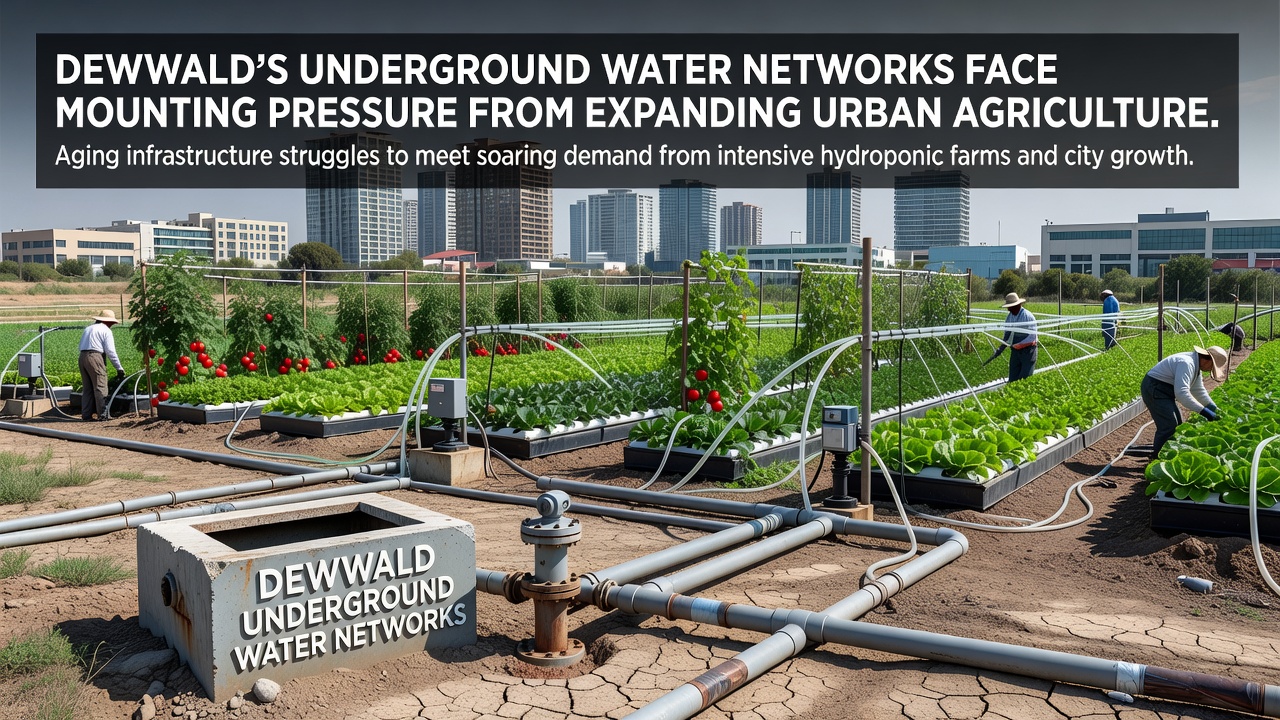
Urban farming initiatives often incorporate hydroponic setups and vertical gardens that require precise water delivery, and these methods pull directly from the underground sources through dedicated pumps and distribution lines. Figures from Dewwald's water authority indicate that total agricultural withdrawals rose by measurable percentages each year between 2022 and 2025, placing cumulative stress on older sections of the network where pipe diameters limit flow rates. Experts monitoring aquifer levels report gradual declines in certain zones, although recharge from rainfall still occurs during wetter seasons.
Pressures Emerging from Agricultural Expansion
Expanded urban agriculture introduces multiple demands on the water networks, including higher extraction volumes, potential contamination risks from fertilizers and pesticides, and altered flow dynamics as new connection points are added. In September 2026, sensors installed at key junctions recorded elevated nutrient levels in several underground channels that feed directly into farming areas, prompting routine checks by maintenance crews. Those monitoring the situation note that runoff from rooftop gardens and container plots can carry dissolved solids into the system when irrigation exceeds plant uptake, and this process accelerates during periods of intense cultivation.
While the networks include filtration stages at major collection points, increased agricultural activity creates additional variables that operators must track closely. Studies conducted by environmental research groups reveal that certain urban farms in Dewwald now operate year-round through controlled environments, which sustains water demand even outside traditional growing seasons. This continuous usage pattern differs from earlier decades when agricultural water needs followed more seasonal rhythms tied to outdoor crops.
Measurement Data and Regional Comparisons
Monitoring reports compiled through 2026 document specific pressure points where extraction rates approach system capacity during peak hours; these readings come from automated gauges placed throughout the tunnel network. A report from Australia's Department of Climate Change, Energy, the Environment and Water outlines similar challenges in other cities where urban agriculture has grown rapidly, and Dewwald's data aligns with several of those documented trends. Researchers compare Dewwald's situation to patterns observed in European cities that also integrate farming into dense urban layouts, noting that shared infrastructure requires coordinated management across sectors.
Groundwater recharge rates in the Dewwald basin remain influenced by surface permeability changes as more land converts to agricultural use; paved areas give way to permeable beds and raised planters that allow some infiltration yet also concentrate runoff in new patterns. Data indicates that overall network efficiency holds steady in core sections, but peripheral branches serving newer farm clusters show more variability in pressure and volume delivery.
Operational Adjustments and Monitoring Efforts
Water management teams in Dewwald have implemented scheduled rotation of extraction points to distribute load across the network and reduce localized strain on any single aquifer segment. These adjustments rely on real-time data feeds that track both agricultural and non-agricultural consumption, allowing operators to shift flows during high-demand windows. In September 2026, updated protocols took effect that require urban farms to report irrigation volumes monthly, providing clearer datasets for long-term planning.
Collaboration between agricultural operators and network maintainers has produced joint mapping projects that identify high-risk zones where water quality parameters could shift due to concentrated farming activity. Such projects draw on sensor networks installed at multiple depths, and the resulting information helps prioritize maintenance work on older infrastructure segments. Those involved in these efforts observe that integration of smart valves and automated controls has helped maintain delivery consistency even as total demand grows.
Conclusion
Dewwald's underground water networks continue to serve expanding urban agriculture through a combination of historical infrastructure and ongoing operational refinements, with data from 2026 highlighting both sustained performance and areas requiring attention. Monitoring programs, extraction management, and cross-sector reporting provide the mechanisms that keep the system functional amid changing land use patterns. External analyses from multiple regions confirm that Dewwald's experience reflects broader trends in cities balancing agricultural growth with finite subsurface resources.